
How Do Porta Potties Work?
Underneath the seat sits a holding tank, usually 60 to 70 gallons, pre-charged with a deodorizing chemical that breaks down solids and knocks back odor. When you use it, waste drops into that tank and stays there until a service truck pumps it out. There's no flush, no water tank feeding it, just gravity and the chemical doing the work between visits. A vent pipe runs from the tank to the roofline of the unit, so gas escapes upward instead of building up inside. Most standard units measure about 44 by 48 inches on the ground and stand roughly 92 inches tall, which is why they fit into a single parking space or a narrow strip along a fence line. For a construction worker on a Harlingen site, that means the unit near the fence gets used dozens of times a day and doesn't need a water hookup to keep functioning. Picture a construction worker running to porta potty between tasks on a lunch break; the setup has to hold up under that kind of traffic without a plumbing crew ever showing up. Anyone who has sketched a how do porta potties work diagram on a napkin for a crew meeting knows it comes down to just three parts: tank, seat, vent. Renters comparing options can check standard porta potty rental specs before choosing a unit, and pricing runs from a single-day rate up through a full monthly porta potty rental term. Anyone searching portable toilet chemicals near me is usually trying to source the same blue charge techs load during service, not something meant for a home bathroom.
How Does a Flushable Porta Potty Work?
A flushable unit adds a small onboard freshwater tank and a foot pump or hand-pump flush that pushes a splash of water into the bowl, rinsing waste down into the same style of holding tank a standard unit uses. It's not connected to a water line. It's a self-contained flush, more like an RV toilet than a home bathroom. That's the short answer to how do flushable porta potties work: a foot pump, a small freshwater reserve, and the same holding tank underneath doing the rest. That's what separates a deluxe flushable porta potty from the standard model: a hand-wash basin, a flush mechanism, and usually a nicer interior finish, all still running on tanks instead of pipes. These units show up most at weddings and upscale events where guests expect something closer to indoor plumbing. Renters planning a wedding restroom rental or a festival restroom rental in Harlingen often step up to deluxe units for exactly this reason. ADA-compliant units follow the same servicing logic but add specific clearances: ADA Standards section 403.5.1 calls for a 36 inch clear route, and section 404.2.3 requires a 32 inch minimum door opening, so the unit itself is bigger to meet those numbers. Check ADA accessible porta potty options if the job or event needs one on-site.

How Does a Portable Sink Work?
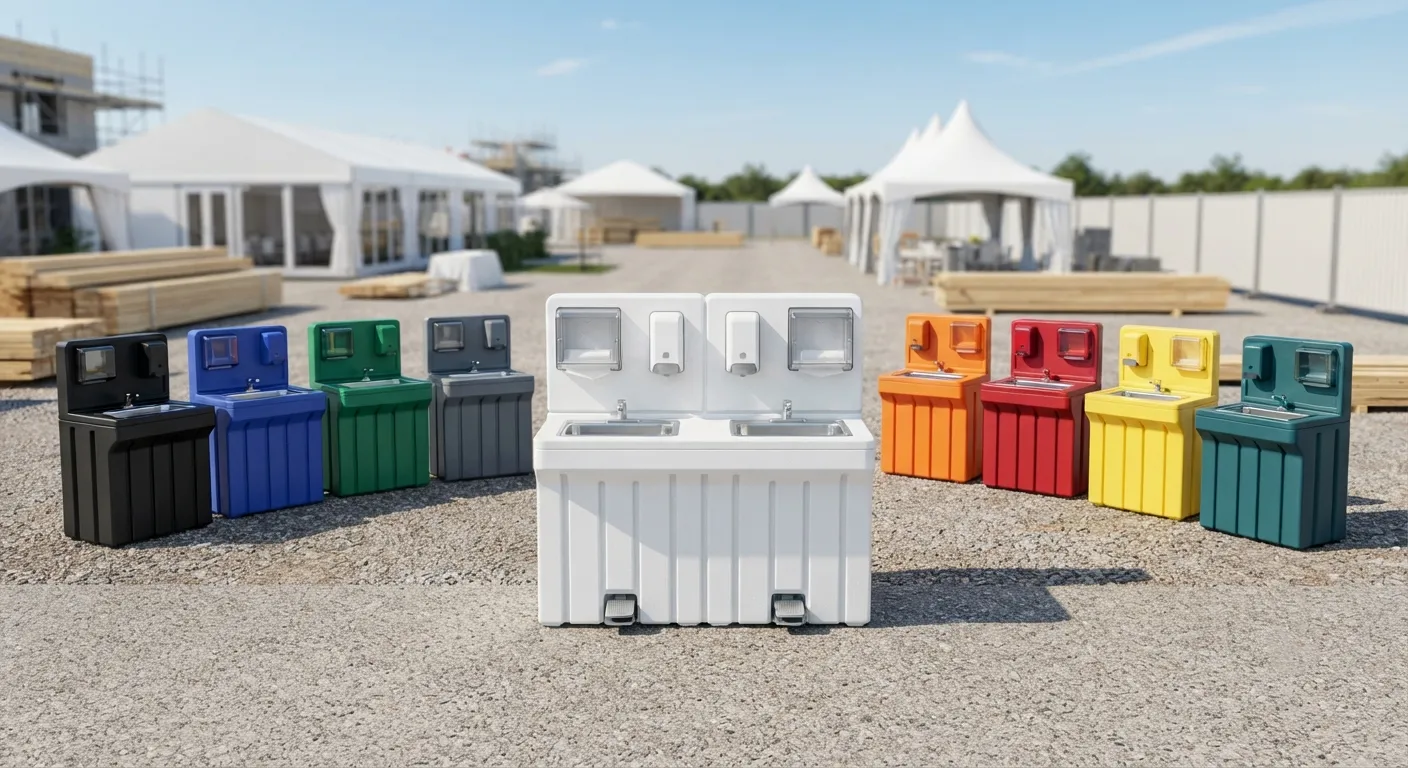
A portable handwashing station holds fresh water in an upper tank, gravity-feeds it through a spigot or foot pump, and catches the wastewater in a separate lower tank so nothing drains onto the ground. Soap dispensers and paper towel holders mount on the side. That matters more than it sounds like: 29 CFR 1910.141(d)(2) requires soap and towels or a hand-drying device at washing facilities, and hand sanitizer alone doesn't satisfy that. On a construction site applying paints, coatings, herbicides or insecticides, OSHA 1926.51(f)(1) specifically requires washing facilities for that contaminant exposure, separate from general toilet counts. A handwashing station rental or portable sink rental covers that need without tying into a building's plumbing, and a hand sanitizer station rental can supplement but shouldn't replace it. Farms with hand-labor crews fall under a different rule: OSHA 1928.110 requires field sanitation with potable water, toilets and handwashing within a quarter mile walk, one facility per 20 employees. That's worth knowing for anyone setting up farm and agricultural restrooms outside Harlingen proper.
What Keeps a Porta Potty From Smelling?
The chemical charge in the tank is doing most of that work, breaking down waste and locking odor down between service visits, alongside the roof vent pulling gas up and away from the seat. ANSI/PSAI Z4.3 sets the baseline service interval at once a week for up to 10 users over a 40 hour week, which is why a busy job site or event needs more frequent pumping or more units, not just a bigger tank. Service techs use a dedicated septic tank cleaning chemical blend formulated for portable units, different from what goes in a residential septic tank. Curious renters can read more on do porta potties smell and how often are porta potties cleaned. For camping trips, the same tank-and-chemical system applies, just smaller and towable; see camping porta potty for that setup. How do camping porta potties work is really the same question as the job-site version, just scaled down for a weekend instead of a 40 hour week. Every construction worker porta potty ratio on a Harlingen site traces back to OSHA 1926.51(c), which sets counts by worker headcount, and the OSHA portable toilet requirements page breaks that down further. For general planning, how many porta potties do I need walks through the math, and construction site services covers the rest of what a Harlingen job site typically rents.
| unit | day | week | month |
|---|---|---|---|
| standard | $100-$350 | $130-$500 | $125-$325 |
| deluxe | $85-$1200 | $150-$290 | -- |
| ada | $200-$400 | $240-$500 | -- |
Delivery in Harlingen typically adds a separate fee, and placement questions on tighter lots are worth checking against the porta potty placement guide before delivery day. Sites near San Benito, about 6.3 miles southeast, or Juarez, 2.9 miles west, run the same equipment and the same rules.
Do porta potties need to be near a water line?
No. Standard units run entirely on their internal holding tank and chemical charge, no water hookup required. Flushable and deluxe units carry their own small freshwater tank for the flush. That's the whole point: a portable restroom rental works anywhere a truck can reach it.
How often does a porta potty get serviced?
Weekly is the standard baseline under ANSI/PSAI Z4.3 for up to 10 users. High-traffic construction sites or multi-day events usually need twice-weekly or daily service. Ask about service frequency when booking a porta john rental for a busy site.
What chemicals go in a porta potty tank?
A blue deodorizing and waste-breakdown chemical, added at setup and topped off during service. It's different from residential septic tank treatments. Techs handle the chemical charge during each pump-out visit, so renters never need to buy or add it themselves.
Can a porta potty freeze in winter?
Yes, the tank chemical and any standing water can freeze in hard cold. It doesn't happen often in Harlingen, but porta potty in winter covers what changes when temperatures drop.
How much clearance does delivery need?
Roughly 60 feet of straight clearance behind the truck for a roll-off style delivery; porta potty units need less but still need a clear path. Confirm access when you request a quote so delivery day goes smoothly.
Next step
Get a delivery date
Tell us the address, the dates and the headcount. We size the order and confirm the route.