
How Many Restrooms Does a Harlingen Farm Need?
Start with the crew, not the field. OSHA 1928.110 covers field sanitation for hand-labor agricultural employees and calls for potable water, toilets and handwashing within a quarter mile of where people are working, at a rate of one facility per 20 employees. That's the baseline whether you're running citrus crews near Juarez, 2.9 miles west of Harlingen, or a bigger operation spread across several sections.
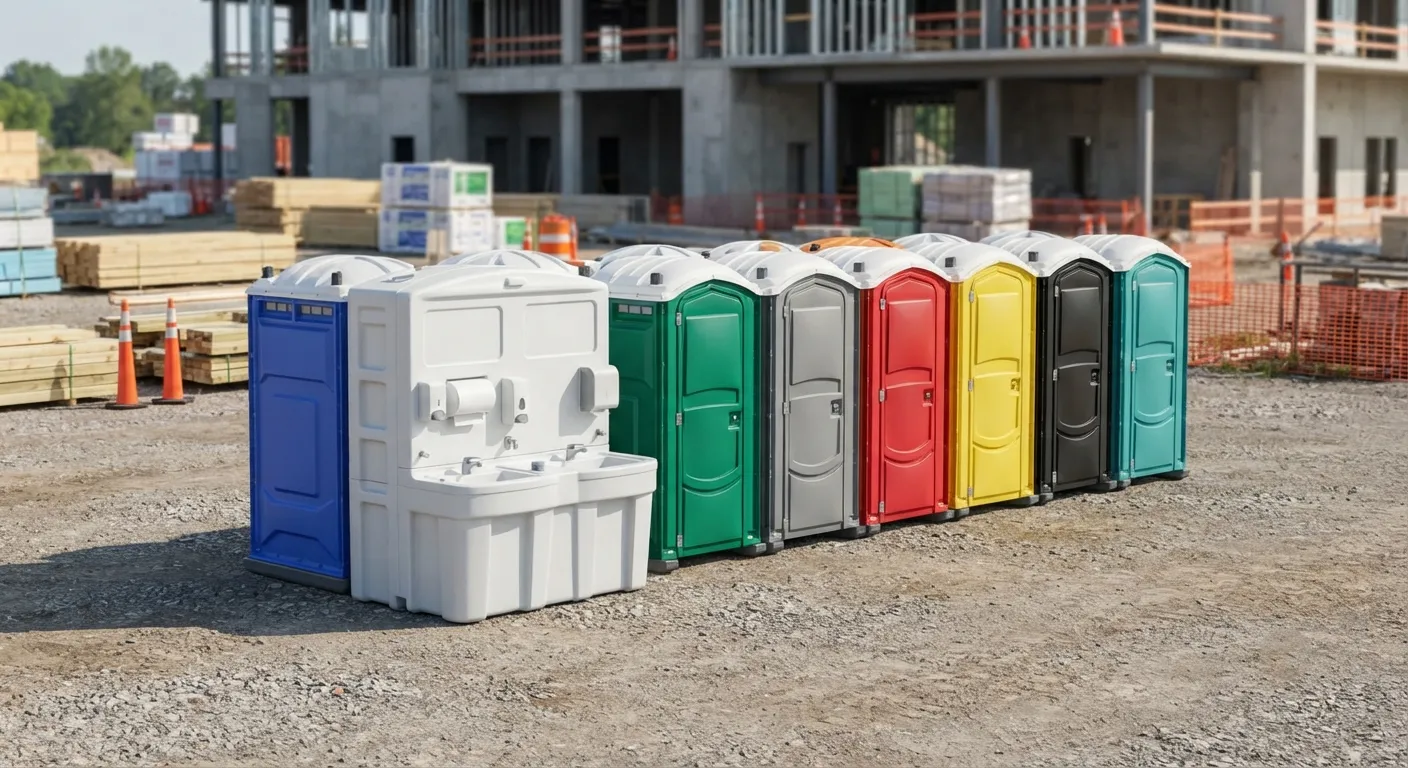
If your crew works in fixed rows, you can plant units at the field edge and move them as harvest progresses. Spread-out operations often need two or three cluster points instead of one central bank, since the quarter mile limit is measured from the work, not from the farmhouse. A standard porta potty rental with a 60 to 70 gallon holding tank handles a crew of that size for about a week between services under normal use, based on the ANSI/PSAI Z4.3 service interval for units seeing regular daily traffic.
Bigger operations, packing sheds, or seasonal harvest crews that spike past 40 or 50 workers should look at the OSHA 1926.51(c) construction ratio as a rough sanity check, even though it's written for job sites: 1 toilet for 20 or fewer, 1 toilet and 1 urinal per 40 from there up. It's not the ag rule, but it tells you when one unit stops being enough. Use our how many porta potties do I need guide to run the math against your actual headcount, and check OSHA portable toilet requirements for the full breakdown by industry.
What Does It Cost to Rent Farm Restrooms in Harlingen?
A standard unit runs $100 to $350 a day or $130 to $500 a week, and most farm accounts land on a month-to-month rate instead, since crop cycles rarely fit a weekly box.
| Unit | Day | Week | Month |
|---|---|---|---|
| Standard portable toilet | $100 - $350 | $130 - $500 | $125 - $325 |
| Handwashing station | see below | see below | see below |
Handwashing stations don't carry a listed monthly band in our pricing data, so ask for a quote sized to your crew when you request a quote. Pair a handwashing station rental with every toilet cluster; 29 CFR 1910.141(d)(2) requires soap and towels or a hand-drying device at wash stations, and hand sanitizer alone doesn't satisfy that. If your crew handles pesticides, herbicides or treated seed, OSHA 1926.51(f)(1) requires washing facilities specifically for workers applying paints, coatings, herbicides or insecticides, so plan wash stations at the mixing and loading area, not just the field entrance.
Delivery adds $100 to $500 depending on distance and access; a farm road with soft shoulders or a locked gate can push that toward the higher end. See porta potty rental cost and monthly porta potty rental for the full pricing picture, and check porta potty rental per day if you're covering a short harvest push instead of a season.
Where Should Units Sit on a Working Farm?
Set units where the crew actually stands, not where they're easiest to reach by truck. A standard unit is about 44 by 48 inches on the ground and stands roughly 92 inches tall, small enough to fit a headland or a turnrow without blocking equipment. Keep it off soft irrigated ground when you can; a stable, level pad keeps the unit from tipping and makes servicing faster.
Placement in Harlingen has to account for real distance, not just convenience. Operations spread toward San Benito, 6.3 miles southeast, or out past Lasana, 8.9 miles north, often split into two service zones rather than hauling one unit back and forth across the property. Our porta potty placement guide covers ground stability and access in more depth, and porta john rental and portable toilet rental both cover the same standard unit under different names if your crew searches either term.
For crews staying on through cold mornings or heat spikes, see porta potty in winter for freeze protection notes. Larger operations running a packing crew alongside field labor sometimes add a restroom trailer rental for supervisors or office staff, and a construction dumpster rental or storage container rental for equipment and debris during a build-out season. Full service coverage for bigger operations is on our construction site services page, and our service areas page lists coverage across Harlingen and nearby towns.
How often do farm restrooms get serviced?
Weekly is the baseline for a crew of 10 or fewer over a standard work week, per the ANSI/PSAI Z4.3 service interval. Bigger crews or hot months need twice-weekly service to keep tanks from filling early. See how often are porta potties cleaned for details.
Do I need an ADA-accessible unit for farm workers?
If you're clustering multiple units, ADA Standards 213.2 requires at least 5 percent to be accessible, never fewer than one. Check ADA accessible porta potty and ADA restroom requirements for specs.
Can I move units mid-season as harvest progresses?
Yes. Units aren't bolted down; we can relocate them as your crew moves fields. Call ahead so we can route a truck, since farm roads sometimes need the same 60 feet of clearance a roll-off delivery needs.
What if my crew handles pesticides or treated seed?
OSHA 1926.51(f)(1) requires washing facilities where workers apply herbicides, insecticides, paints or coatings. Set up a portable sink rental or handwashing station rental right at the mixing station, separate from field toilets.
Do you serve farms outside Harlingen city limits?
Yes. We cover Harlingen and reach out to Juarez, Las Palmas II, San Benito, Arroyo Colorado Estates and Lasana. Contact us through request a quote with your acreage and crew size.
Next step
Get a delivery date
Tell us the address, the dates and the headcount. We size the order and confirm the route.